If you’ve started looking for a church to host your wedding in Dallas–Fort Worth, you’ve probably already discovered something surprising: most churches have very specific rules about photography and video.
You’re not alone. Almost every established church in the DFW area has a list of do’s and don’ts for wedding ceremonies, and many of them are centered around how visible the photo and video team is allowed to be.
And honestly? That makes sense.
A wedding ceremony is a sacred, emotional moment not a photo shoot. When photography is done without reverence for the ceremony, it can feel intrusive for both your guests and the church staff.
So how do you find a photographer who can create beautiful images and respect the space you’re getting married in?
Let’s break it down.
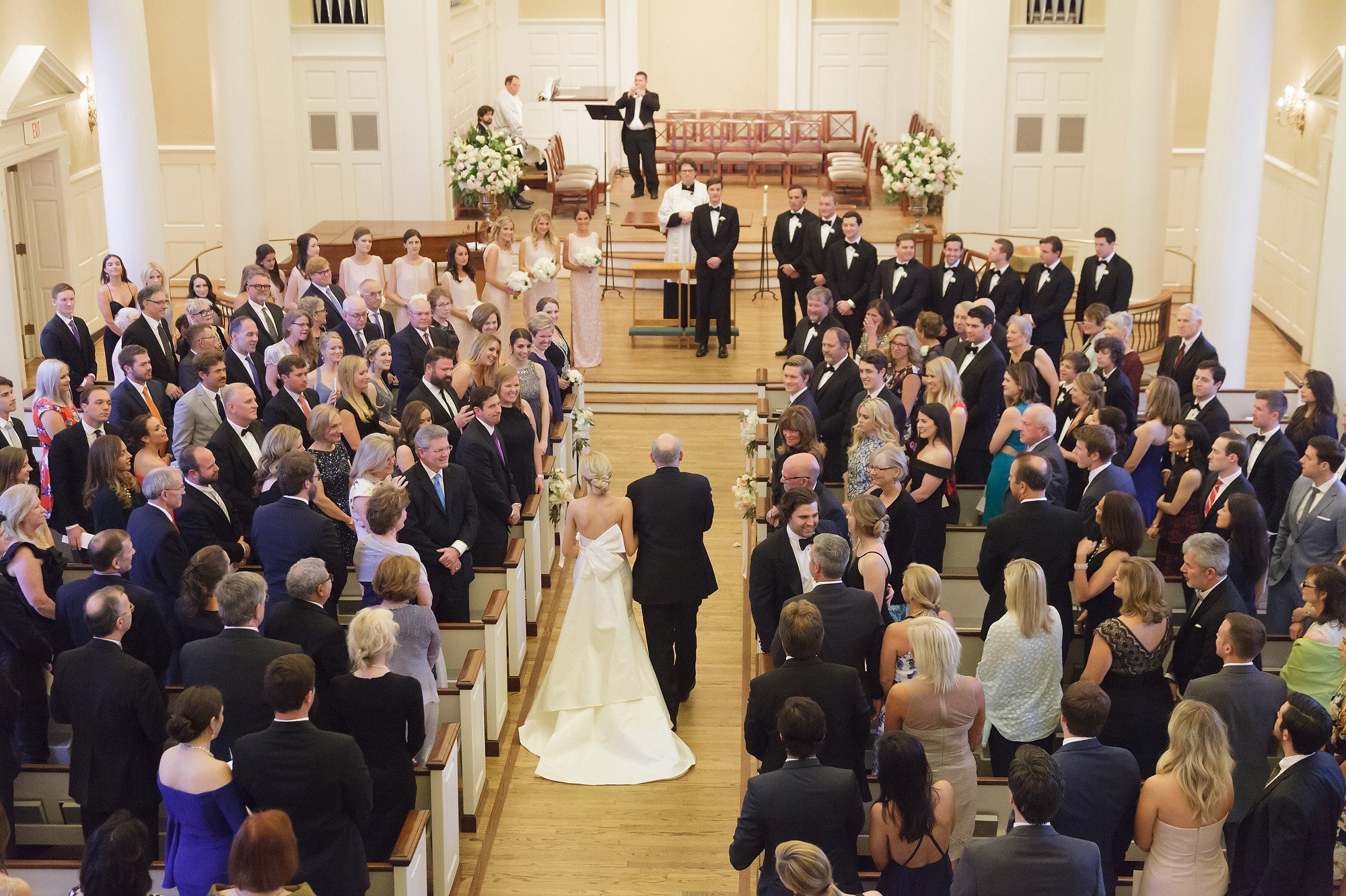
Perkins Chapel on campus of SMU is a gorgeous church to get married. They have a fair amount of rules to follow but over the last few years they have worked with photographers to help them create great work while still preserving the sanctity of of the ceremony.
First, Be Honest About the Kind of Ceremony You Want
Some photographers, when there are no restrictions, will move anywhere they want to get the “best” angle, standing in aisles, stepping in front of guests, and being very visible throughout the ceremony.
If that’s what you want, a traditional church may not be the best fit.
Instead, you might consider one of the many Dallas venues that have chapels attached to reception spaces, where photography is less restricted. In those cases, it’s still important to talk with your officiant and your photo/video team ahead of time so everyone is on the same page.
The most established and historic churches in Dallas tend to be the most restrictive—and that’s usually because they’ve seen ceremonies turn into productions without clear boundaries.
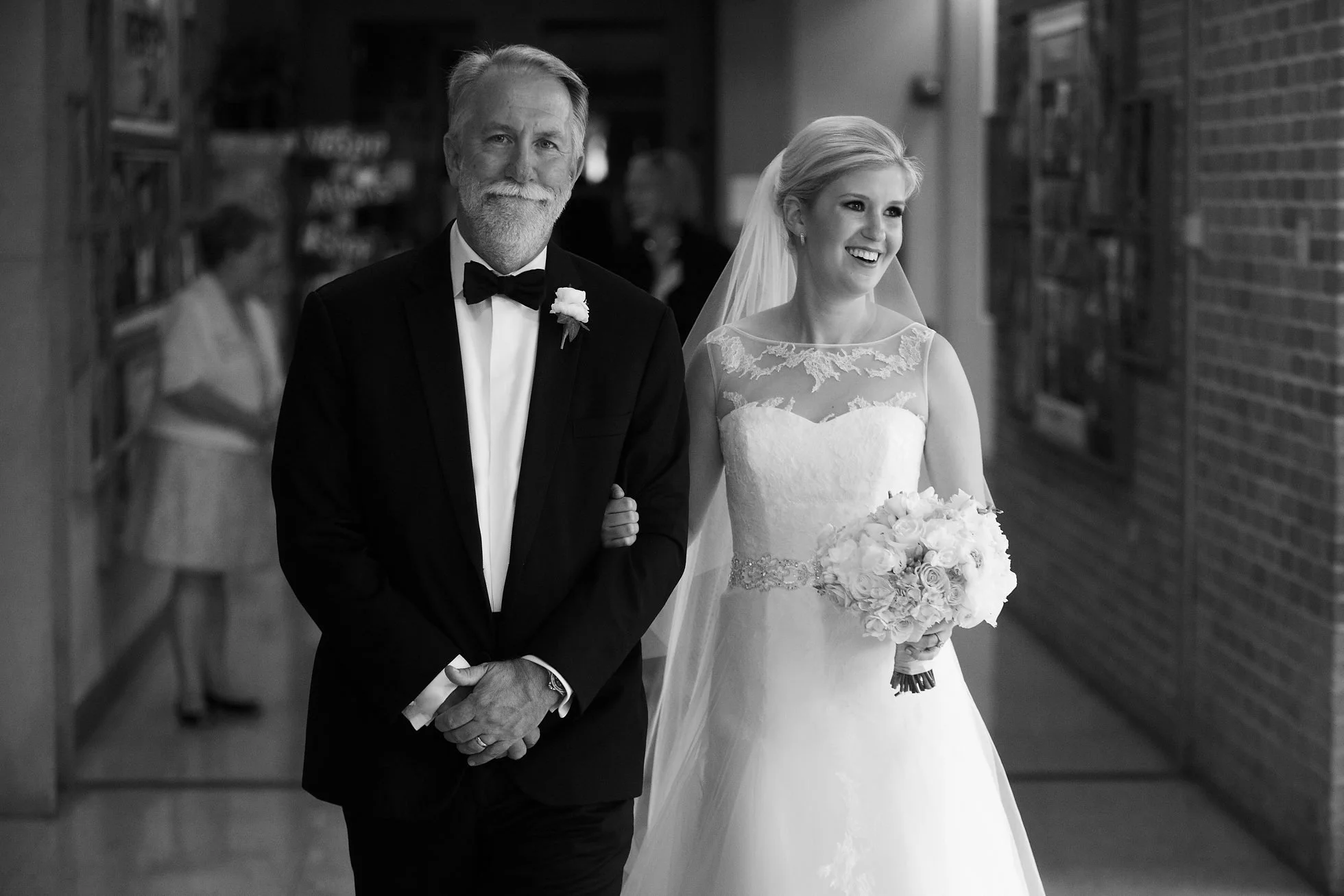
Many of the most well known and beautiful churches, like Saint Michael and All Angels are very restrictive of photography during the ceremony. If you do show respect and professionalism they will work with you and you can still get beautiful moments like this one of the bride and her dad waiting to walk down the aisle.
The Three Types of Church Photography Rules You’ll See in Dallas
In our experience, most churches in Dallas fall into one of these three categories:
1. The Most Conservative Churches
Examples: Highland Park United Methodist, HP Pres, and similar churches.
Photography is usually allowed only from the narthex (the lobby behind the sanctuary doors) and/or the balcony.
No floor access during the ceremony at all.
This requires a photographer who is very comfortable shooting from far away and knows how to work discreetly with long lenses.
2. Moderate Restrictions (Most Common)
Examples: Perkins Chapel, Saint Thomas Aquinas, and most Catholic churches.
Photography is allowed from the back of the church and sometimes from the sides of the pews.
You’re still very limited in movement and angles, especially for the processional.
This is probably the most common and, honestly, a pretty fair compromise. The only downside is that we usually get just a few feet of space to work with instead of the full aisle, which limits some angles—especially of the bride walking in.
3. No Restrictions
This is usually chapels that are part of wedding venues (like many Walter’s Wedding Estates venues).
Even here, it’s still worth having a conversation with your photo/video team. Some couples want us to get the best angles no matter what. Others prefer that we stay as invisible as possible. Neither is wrong just get everyone aligned.
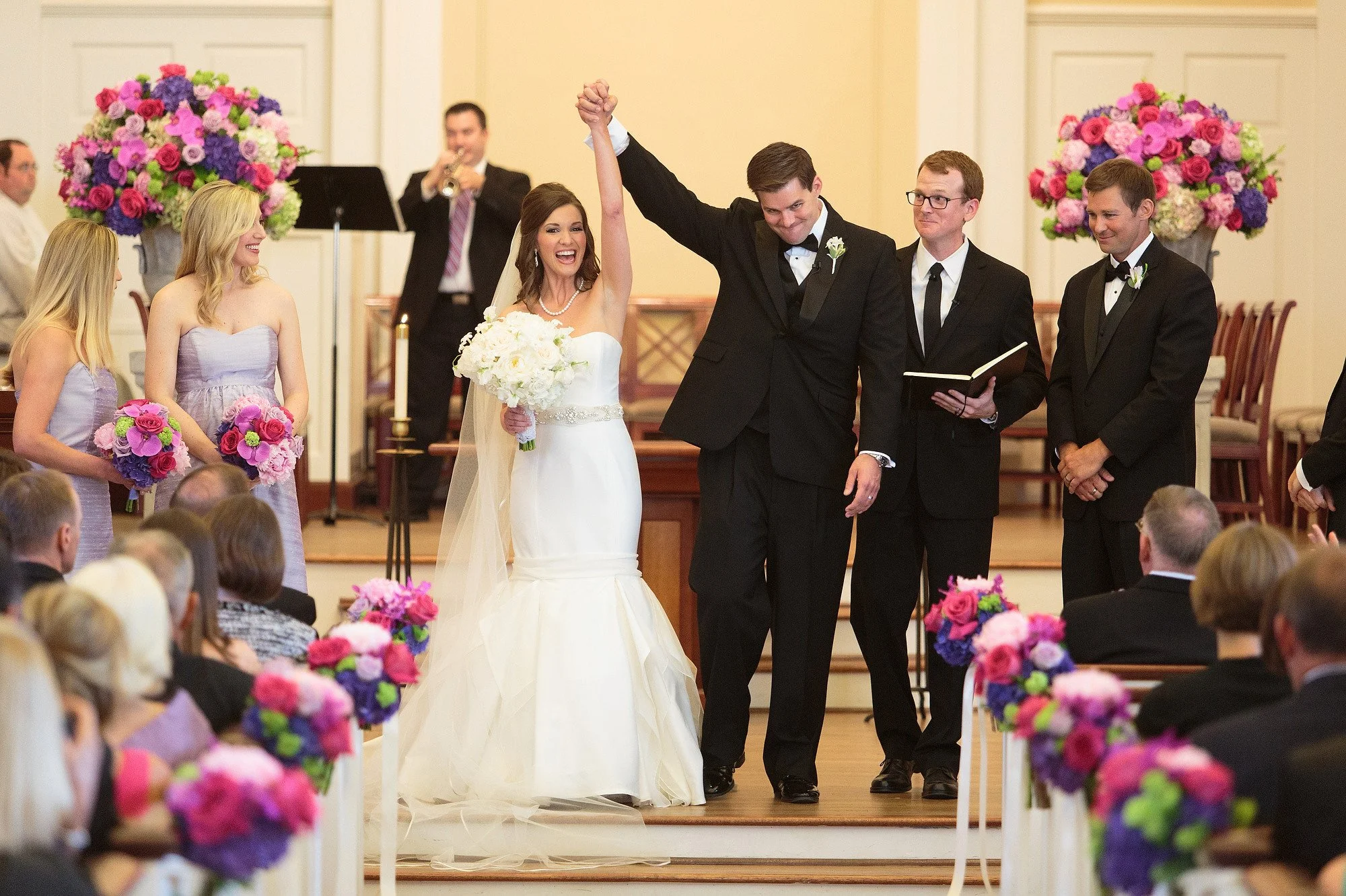
The right lenses, primarily long telephotos, are what is needed for the big churches in Dallas. If you’re photographer doesn’t show those kinds of weddings on their website talk with them about the restrictions they will face so they will be able prepare to make great images from the back of the sanctuary or balcony.
How to Choose the Right Photographer for a Church Wedding
Here’s what really matters:
1. Do They Have Experience in Your Church (or One Like It)?
Church weddings require a very different skill set than open, unrestricted venues. Ask your photographer if they’ve worked in similar churches and how they handle restrictions.
2. Are They Prepared to Shoot From Far Away?
This sounds simple, but it’s huge.
We carry specific long lenses in our kit just for large, restrictive churches because sometimes there is literally no other way to get close. If a photographer isn’t prepared for this, they’ll struggle.
3. Do They Dress Appropriately?
This may sound small, but it matters especially in more conservative churches.
Stephanie and I dress in all black for every wedding, and when needed we’ll dress more formally (suit/dress). It helps us blend in, be less noticeable, and signals to church staff that we’re professionals who take the setting seriously.
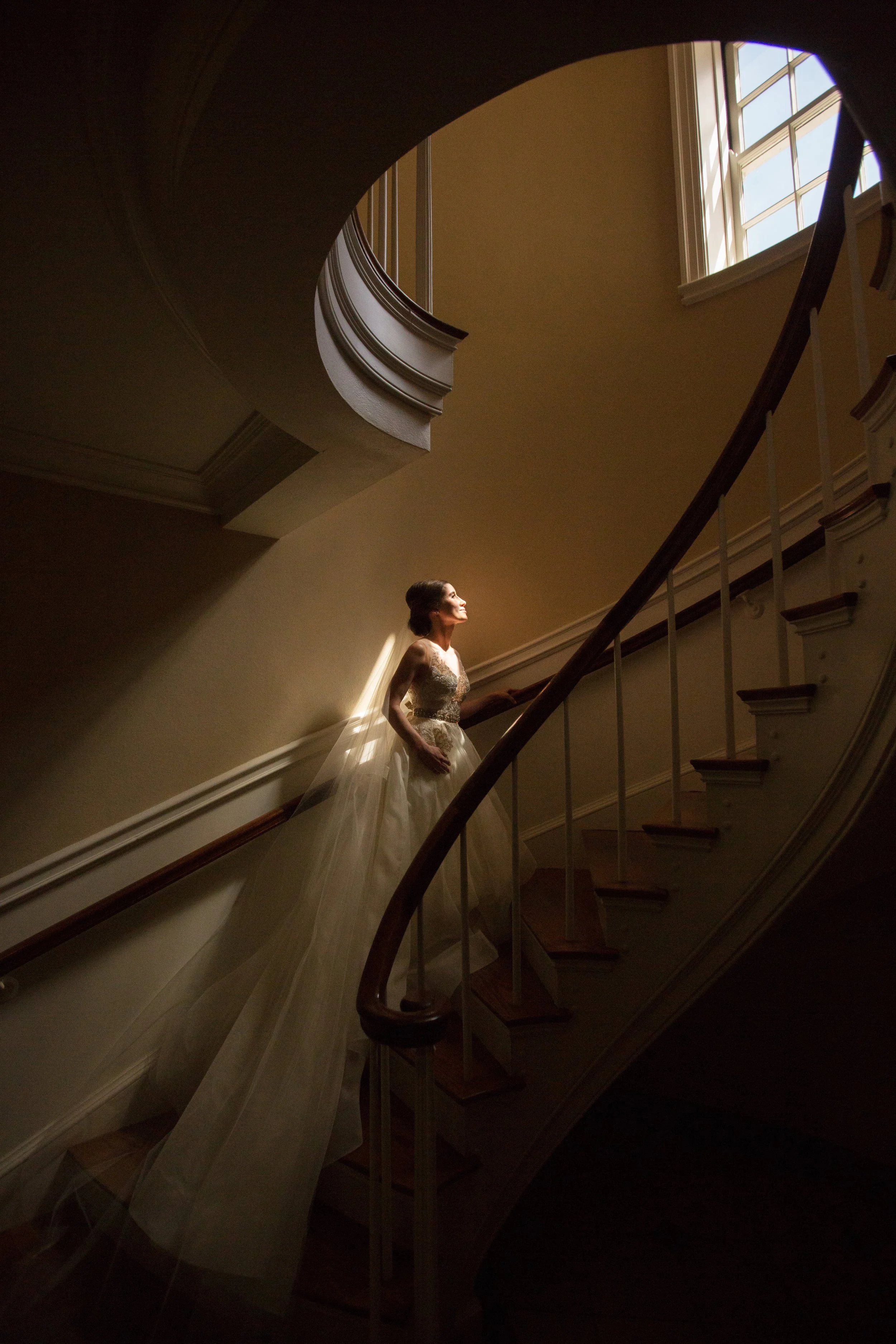
There are so many wonderful reasons to get married on one of Dallas’s iconic churches and the images you can make in their many gorgeous spaces are often unmatched. This staircase at Perkins chapel is simply iconic.
Our Personal Approach to Church Ceremonies
These are the rules we set for ourselves:
We never block the view of family and friends.
We don’t go on the altar unless it’s a very special situation.
If you don’t plan to turn toward each other at all during the ceremony, we may discreetly position ourselves (sometimes behind a floral arrangement) so we can capture real emotion during the vows.
If allowed, one of us may briefly kneel at the head of the aisle to capture the full processional then we immediately clear that space.
No flash until after the first kiss (and only if needed).
Most importantly: the ceremony is not a photo shoot. We move and behave in a way that minimizes our impact on the experience.
What Is Not Acceptable
Our biggest pet peeve in wedding photography is blocking the groom’s view of the bride as she walks down the aisle.
I’ve seen it dozens of times. It screams inexperience.
I know it’s a high-pressure moment and photographers want “the shot,” but it is never okay to be that person.
As a couple, this is hard to predict but you can ask about it.
Have a conversation with your photographer about:
How visible they plan to be during the ceremony
How they handle the processional
How they prioritize the guest experience
Their answers will tell you a lot.
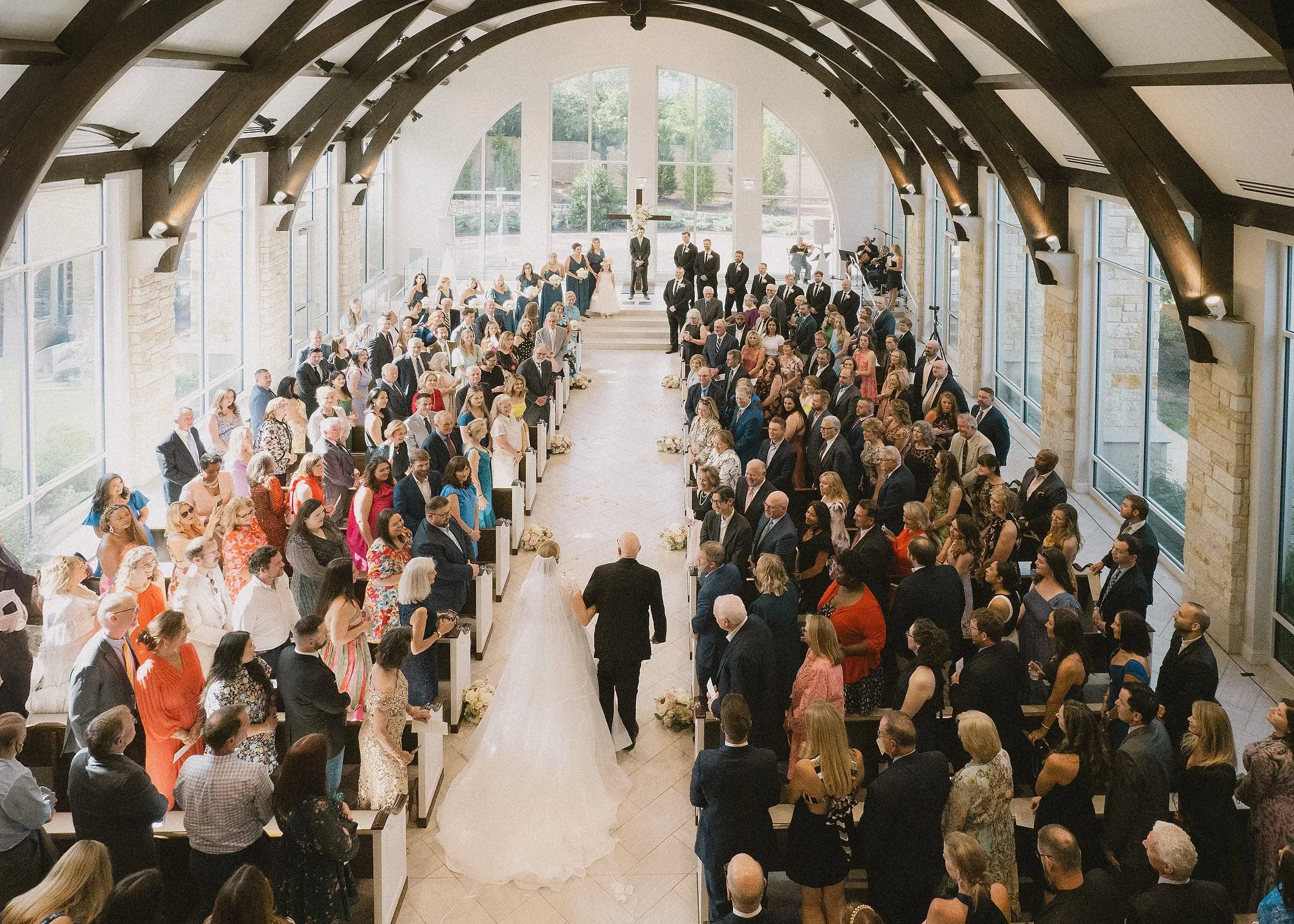
At this wedding venue in Southlake there were little to no restrictions on where we could stand for the ceremony but we adhere to a set of rules we’ve made for ourselves that keep our presence unobtrusive. In this image I was stationed on kneeling on the floor just in front of the bridesmaids and I photoshopped myself out for the final image.
The Bottom Line
A great church wedding photographer in Dallas isn’t just someone who takes beautiful photos.
It’s someone who:
Understands church culture and restrictions
Is prepared for difficult shooting conditions
Knows how to be invisible when it matters most
If you choose the right team, you’ll get beautiful, emotional images and a ceremony that still feels like a ceremony not a production.